
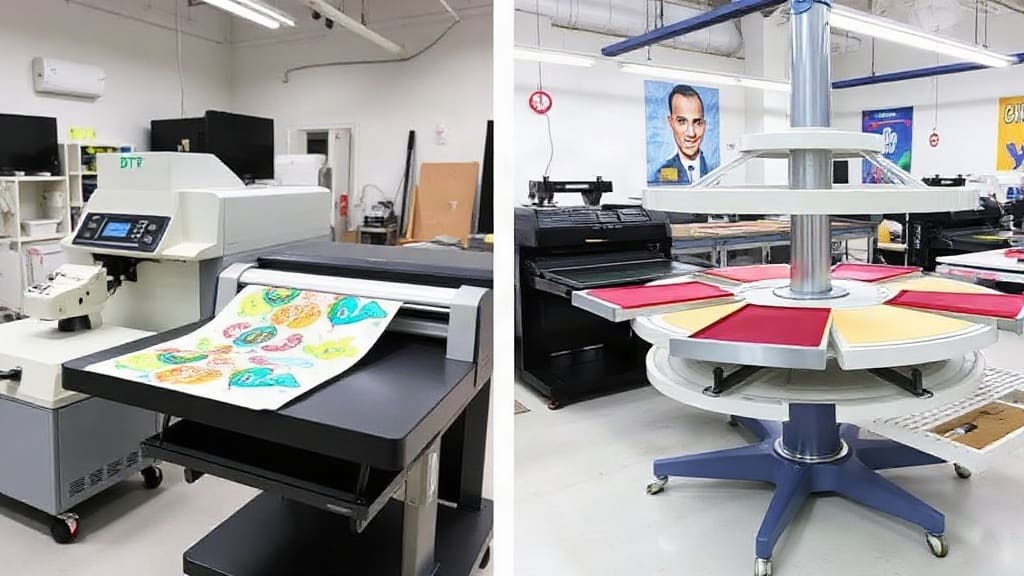
When you're starting a custom apparel business, one of the first big decisions you'll face is choosing a printing method. DTF transfers have become a popular alternative to traditional screen printing, but is it the right choice for you? This guide breaks down the pros, cons, and real-world differences to help you make an informed decision.
What Are DTF Transfers?
DTF (Direct to Film) transfers involve printing your design onto a special film, applying adhesive powder, and then heat-pressing it onto the garment. This method allows for vibrant, detailed prints without the need for screens or complex setup.
How DTF Works in Practice
In my own workshop, I've used DTF for one-off custom orders and small batches. The process is surprisingly simple: you print, powder, shake off excess, and press. Within minutes, you have a finished shirt. The learning curve is gentle, and the equipment costs less than a full screen printing setup.
What Is Screen Printing?
Screen printing, also known as silk screening, uses a mesh screen to transfer ink onto the garment. Each color in your design requires its own screen, which makes setup time and cost higher. It's the go-to method for large orders because of its low per-unit cost and incredible durability.
The Traditional Workflow
Screen printing involves creating screens, burning images, setting up presses, and mixing inks. I remember my first screen printing job took nearly an hour just for setup. But once everything was aligned, we could print hundreds of shirts in an afternoon.
Cost Comparison: Setup and Per-Unit
One of the biggest factors is cost. For screen printing, you'll pay for screens, ink, and setup time. For a single-color design, that might be manageable. But for a four-color design, setup costs can soar. On the other hand, DTF transfers have minimal setup fees. You simply print each transfer as needed, which makes them ideal for small runs.
When Small Batches Make Sense
If you're selling at local markets or doing custom orders, DTF is unbeatable. You don't have to order 50 shirts to make a profit. You can print just one shirt and still make money. That flexibility is a game changer for many small businesses.
Durability and Feel
Screen printing is known for its durability. The ink bonds with the fabric and withstands countless washes. DTF transfers, when applied correctly, also hold up well, but they sit on top of the fabric, which can slightly affect the feel. In my tests, a good DTF transfer lasts over 50 washes without cracking, but screen printing can last even longer.
What About Stretch and Comfort?
Screen prints are more flexible and stretch with the fabric. DTF prints, especially on stretchy materials, might crack if not pressed with the right adhesive. Modern DTF films and powders have improved, but you should always test on your chosen garment.
Color and Detail Capabilities
DTF shines when it comes to color complexity. You can print photorealistic images with gradients and hundreds of colors without additional setup. Screen printing is limited in this regard unless you use simulated process printing, which is complex and expensive.
White Ink and Vibrant Colors
DTF handles white ink brilliantly, which is essential for printing on dark garments. Screen printing requires a white underbase, adding time and cost. For a full-color design on a black shirt, DTF is often the better choice.
Workflow Efficiency and Turnaround
For large orders, screen printing is faster once the screens are set up. But for smaller quantities, DTF is quicker from start to finish. You can also print DTF transfers in advance and press them on demand, which reduces lead times.
Scaling Your Production
As your business grows, you might combine both methods. Many shops use screen printing for bulk orders and DTF for custom one-offs. That hybrid approach maximizes profitability while offering flexibility to your customers.
Cost of Equipment and Space
A basic DTF setup requires a printer, heat press, powder shaker, and curing oven. That can cost around $3,000 to start. Screen printing requires a press, screens, exposure unit, and washout booth, which can easily exceed $10,000 and take up more space.
Maintenance and Consumables
DTF uses film, ink, and powder, which are widely available. Screen printing uses emulsions, inks, and chemicals that require careful disposal. If you're working from a small studio, DTF is more practical.
Environmental Impact
DTF produces less waste than screen printing, especially with water-based inks. The film is recyclable in some areas, but you should check local guidelines. Screen printing often uses PVC-based inks that require special handling.
Choosing Sustainable Options
If sustainability is important to your brand, look for eco-friendly DTF powders and films, or water-based screen printing inks. Both have their pros and cons, so weigh your priorities.
Frequently Asked Questions
Can DTF transfers be used on any fabric?
Yes, DTF transfers work on cotton, polyester, blends, and even nylon. However, you should lower the pressure and temperature for delicate fabrics like nylon to avoid melting. Always test on a small area first.
How many washes do DTF transfers survive?
With proper application and care, DTF prints can last up to 50 washes or more. Wash garments inside out in cold water and avoid using fabric softeners to extend the life of the print.
Is DTF more expensive than screen printing for large orders?
For large orders, screen printing is more cost-effective per unit. DTF is competitive for small to medium batches. If you're ordering 100 or more shirts, screen printing will likely save you money.
Do I need a special printer for DTF?
Yes, you need a DTF printer that uses pigment inks and has a white ink circulation system. Standard inkjet printers won't work. You'll also need a powder shaker and a heat press.
Can I do DTF transfers at home?
Yes, you can set up a DTF station in a home garage or spare room. Just ensure you have proper ventilation and enough space for the equipment. It's a compact setup compared to screen printing.
Final Verdict: Which Method Should You Choose?
If you're just starting out or focus on custom, low-quantity orders, DTF transfers are a smart investment. They offer low setup costs, ease of use, and excellent color reproduction. For bulk production and maximum durability, screen printing remains the industry standard. Many successful businesses use both, leveraging each method's strengths.
In the end, your choice depends on your budget, volume, and customer needs. Evaluate your typical order sizes and design complexity. By understanding the trade-offs, you can build a printing workflow that keeps your customers happy and your margins healthy.