
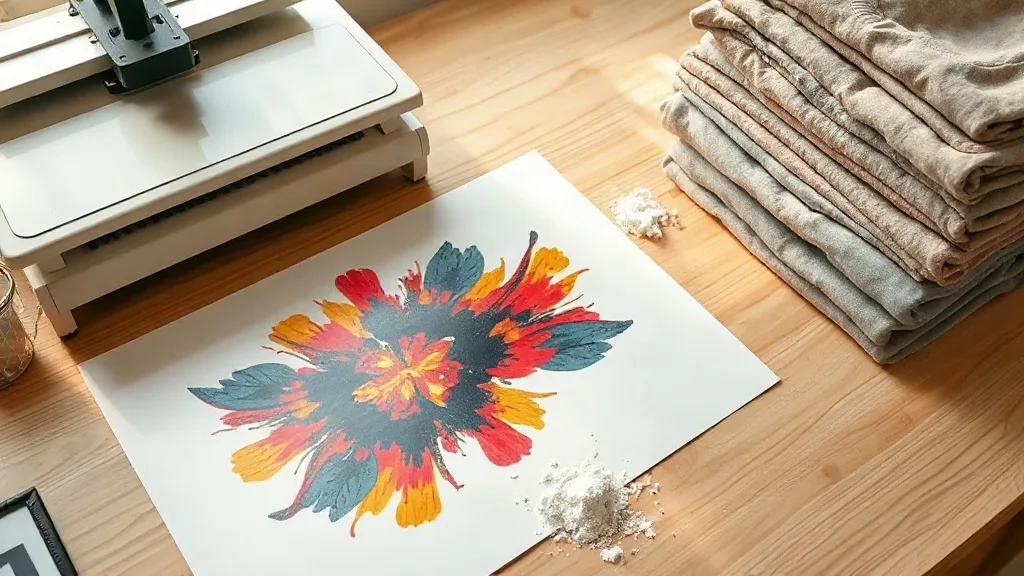
Most people meet dtf transfers through a single garment: a bright, full-color design on a cotton tee that somehow survived forty washes without cracking. What that shirt hides is a chain of small decisions, from the film you feed the printer to the pressure you set on the heat press. Get one link wrong and the whole job looks amateur. Get them right and you can print on fabrics that screen printing and vinyl both struggle with.
This guide is written from the perspective of a small shop that runs low volumes and cannot afford to waste blanks. It covers what actually matters when you start using dtf in production, where the process breaks down, and how to fix it without buying new equipment every month.
What DTF actually is, minus the marketing
Direct-to-film printing is a transfer process, not a direct-to-garment process. You print a mirror-image design onto a coated PET film using a modified inkjet printer loaded with pigment inks. While the ink is still wet, you dust it with a hot-melt adhesive powder, shake off the excess, and cure the powder under heat so it melts into the ink layer. The result is a flexible, rubbery sheet of pigment and adhesive that can be stored and pressed later.
The pressing step is where the transfer meets the fabric. Heat and pressure melt the adhesive again, and it bonds to the textile fibers while the film carrier is peeled away. That is the entire mechanism. No pre-treatment spray, no special coating on the shirt, no weeding.
Compare that to heat transfer vinyl, where every color is a separate cut and weed operation, and the advantage becomes obvious. A five-color design in vinyl means five passes with a cutter and a lot of tiny scraps on the floor. In DTF it means one print and one press.
Why shops with mixed orders gravitate toward it
The real pull is fabric flexibility. A single DTF sheet can go onto cotton, polyester, blends, canvas totes, and even some nylon jackets, provided you adjust temperature and pressure. That matters when a customer walks in with six different garment types for one team order and expects consistent color across all of them.
There is also the storage angle. Printed transfers keep for months in a cool, dry place if the powder was cured properly. A shop can print a batch on a slow Tuesday, bag it, and press it on Friday when the order actually ships. That decoupling of printing from pressing is the reason some shops run DTF as a small side business, printing sheets for other makers who do not want to own the printer.
The film question nobody warns you about
Not all DTF film is equal, and the difference shows up in the peel, not in the print. Cold-peel film and hot-peel film behave very differently. Hot peel lets you remove the carrier while the transfer is still warm, which speeds up production considerably. Cold peel requires the garment to cool completely before you pull the film, which is slower but often gives a softer hand feel on detailed artwork.
Thin film releases more cleanly on fine lines and small text. Thick film is more forgiving if your powder application is uneven, but it can leave a visible border on dark garments if the cut is not tight to the artwork. Buy a small roll of each and test with your own printer before committing to a case.
Press settings that actually work
Manufacturer charts are a starting point, not a rule. Every press runs a little hot or a little cold, and every garment blends fibers differently. Here is a baseline that holds up across most cotton and poly-cotton blends, followed by what to change when it does not work.
- Temperature: 150 to 160 degrees Celsius for cotton, slightly lower for heat-sensitive polyester
- Pressure: medium to firm, enough that you can see the weave through the film but not enough to flatten the fabric
- Time: 10 to 15 seconds for the main press
- Peel: warm for hot-peel film, fully cool for cold-peel film
- Post-press: 5 seconds with a cover sheet or parchment to lock the edges
That final short press is the step most people skip, and it is the one that decides whether the transfer survives washing. A cover sheet protects the print surface from the press platen while the adhesive fully reflows into the fibers.
When the transfer lifts at the corners
Corner lift almost always traces back to one of three things: uneven pressure across the platen, insufficient time, or a garment that was not fully dry. Moisture in the fabric turns to steam under the press and pushes the adhesive away before it can bond. Pre-press the garment for three to five seconds to drive off moisture, then press the transfer. If lift persists on a specific garment, raise pressure before you raise temperature, because overheating polyester causes dye migration and a permanent color shift.
Powder, humidity, and the invisible variables
Adhesive powder is hygroscopic, meaning it pulls moisture from the air. A bag left open in a humid room will clump, and clumped powder cures unevenly, which shows up as patchy adhesion months later. Store it sealed with a desiccant packet and shake the container before each use.
Application technique matters as much as the powder itself. You want a thin, even coat with no bare patches and no heavy drifts. A dedicated powder shaker gives more control than pouring from a bag. After shaking off the excess, cure the powder with a heat gun or in an oven until the surface goes from matte to slightly glossy. Under-cured powder washes out. Over-cured powder becomes brittle and cracks along the design edges.
Where DTF stops being the right answer
Honesty helps here, because no process fits everything. DTF transfers have a noticeable hand feel compared to screen print, especially on large solid areas of ink. On lightweight summer shirts, a big DTF chest print can feel heavier than the customer expects. If a client wants an ultra-soft, barely-there print, plastisol screen printing on a fine mesh still wins.
Stretch fabrics are another boundary. On high-stretch athletic wear, the adhesive layer can crack if the design crosses areas that flex hard, such as the shoulder or knee. Using a stretch-oriented powder and keeping the transfer away from the highest-flex zones helps, but it is not a complete fix. And on garments with heavy water-repellent coatings, adhesion is unreliable no matter what you do.
Buying transfers instead of printing them
Many small shops never buy a DTF printer at all. They order gang sheets from a supplier, press them in-house, and skip the maintenance, ink costs, and powder handling entirely. This is a sensible path if your volume is under a few dozen pieces a week or if you cannot dedicate space to a printer that needs daily attention.
When sourcing, ask about film type, powder used, and cure method. A supplier who can answer those questions precisely is usually running a controlled process. If you are searching for dtf transfers near me, prioritize turnaround time and whether they will print custom gang sheets rather than only stocking ready-made designs. Local pickup saves shipping cost, and being able to hand over a file and collect the same day changes what deadlines you can accept.
Test every new supplier with a small order on the exact garments you plan to use. Press one piece, wash it three times inside out, and inspect the edges. A supplier who passes that test is worth keeping.
Common questions from shops starting out
How long do printed DTF transfers last before pressing?
Stored flat in a cool, dry place away from direct sunlight, cured transfers typically remain usable for several months. Humidity is the main enemy. Keep them in a sealed bag with a desiccant if your work area is damp, and avoid stacking heavy items on top of them.
Can I press DTF onto dark polyester without color bleeding?
Yes, but temperature control is critical. Polyester dyes can migrate into the adhesive layer when the press is too hot, causing a ghosted tint around the design. Use a lower temperature, press for slightly longer, and consider a dye-blocking underlayer for very dark or sublimated fabrics.
Do I need a special printer to make my own transfers?
You need a printer that accepts DTF pigment inks and a film path that handles coated PET without jamming. Many shops convert a dedicated inkjet for this purpose. The printer is only part of the cost, though. Factor in powder, film, curing equipment, and the time spent on maintenance.
What is the minimum order for custom gang sheets?
It varies widely by supplier, and many will print a single sheet if you supply the artwork already arranged. Ask upfront whether they charge setup fees and what file format they prefer, since a badly prepared file can delay an otherwise simple order.
Does DTF work on 100 percent cotton and on blends equally well?
Adhesion is generally strong on both, but the hand feel differs. Cotton tends to hold the transfer slightly softer after washing, while high-polyester blends can feel stiffer at the edges. Adjust pressure and post-press time to compensate.
Building a process you can repeat
The shops that get consistent results from DTF are not the ones with the most expensive equipment. They are the ones who wrote down their settings, tested each new garment style once before running a full order, and kept their powder sealed. A simple logbook with columns for fabric, temperature, time, pressure, and wash-test result will save more money than any upgrade. Start there, and the rest of the process becomes predictable.