
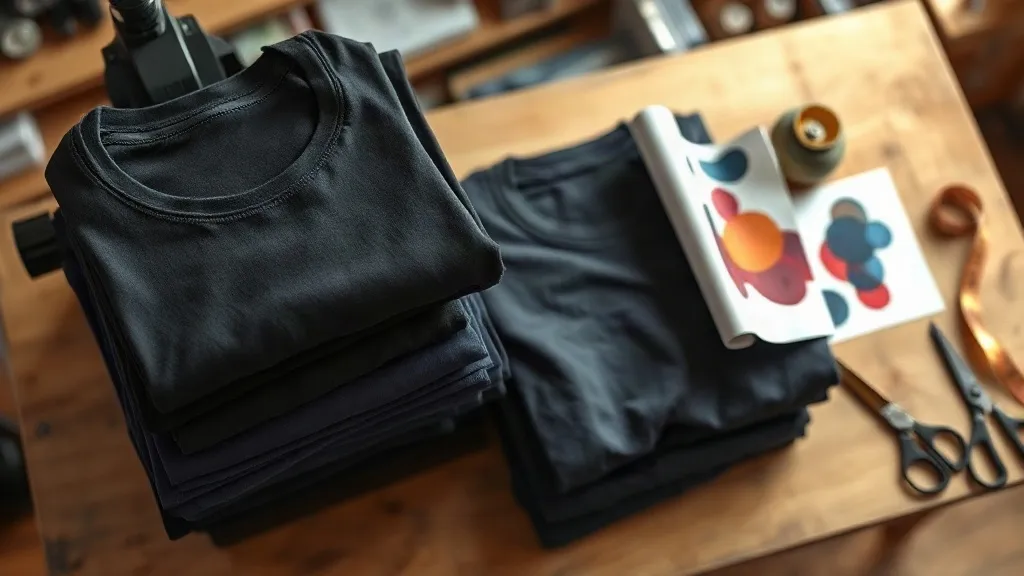
Walk into any print shop that handles streetwear orders and you will eventually spot a stack of boxy, thick cotton tees with a small woven tag at the hem. Nine times out of ten, that stack is shaka wear. The brand built its reputation on heavyweight blanks that feel substantial in the hand, hold their shape through repeated washes, and give a DTF transfer a stable surface to bond to. If you are printing on these garments for the first time, though, the same weight that makes them popular can also cause problems if you treat them like a standard 4.5 oz jersey.
This guide walks through what actually matters when you pair Shaka Wear blanks with direct-to-film output: fabric weight, weave, color, pre-press handling, and how to build a gangsheet that keeps your per-unit cost low without wasting film. It is written for the person standing at the heat press, not for a catalog.
Why heavyweight blanks behave differently under a DTF transfer
A DTF transfer is a layer of printed ink sitting on a adhesive powder film. When you press it, the powder melts into the fabric surface and mechanically locks in. On a thin, loosely knit shirt, the fibers move a lot and the bond can break down faster. On a 6.5 oz or heavier cotton tee with a tight knit, the surface stays flat, the adhesive has more fiber to grab, and the print survives longer.
Shaka Wear's core line sits in that heavier range. Their classic crew and boxy tees typically land between 6 and 7 oz, with a denser knit than you would find on a budget blank. That density is the reason prints look crisp on them. It is also the reason you need to adjust your press settings slightly, because heavy cotton absorbs and holds heat differently than a lightweight poly blend.
Cotton versus cotton-poly blends in the lineup
Most Shaka Wear tees are 100% cotton, but the brand also runs cotton-poly blends and some ring-spun options. The distinction matters for DTF because cotton and polyester cure at different temperatures and tolerate different press times.
- 100% cotton: Press around 300 to 320°F for 10 to 15 seconds. Cotton handles higher heat well and gives a strong mechanical bond.
- Cotton-poly blends: Drop to roughly 280 to 300°F. Polyester can scorch or develop a shiny press mark if you push the temperature too high.
- Ring-spun cotton: Smoother surface, so transfers sit flatter, but the softer hand means slightly lower peel resistance if you under-cure.
If you are unsure which blank you are holding, check the neck label or the product listing before you load the press. Guessing leads to scorched collars and peeling corners, and both cost you a reprint.
Pre-pressing: the step most shops skip
Heavyweight cotton ships with moisture and sizing agents in the fibers. If you press a transfer straight onto a fresh shirt, that moisture turns to steam under the film and creates bubbles or a hazy, milky look in the print. The fix is simple: pre-press the garment for 5 to 7 seconds before you lay down the transfer. This drives out moisture and flattens the surface.
Do not skip this on Shaka Wear specifically. The dense knit holds moisture longer than a thin jersey, so a quick pre-press matters more here than it does on lighter blanks. While you are at it, check the seams and the collar. Heavyweight tees often have thicker double-needle stitching, and a transfer placed too close to a seam will lift at the edge.
Placement tips for boxy and oversized cuts
Shaka Wear leans into relaxed, boxy silhouettes, and that changes where a print looks right. On a standard tee, a chest logo sits about three inches below the collar. On a boxy cut with a dropped shoulder, that same measurement can land too high and look cramped. Measure from the collar seam down to the print's top edge, then step back and look at the whole garment. A slightly lower placement usually reads better on oversized fits.
For full-back prints, account for the wider body. A design that fills a standard medium back panel will look small on a boxy large. Scale up your artwork by roughly 10 to 15 percent when you move to the oversized cuts.
Color choice and how it affects your film
DTF prints carry a white ink base, which means they show up on dark garments. That is one of the format's biggest advantages, and it is why so many shops pair DTF with black, navy, and charcoal heavyweight tees. But the fabric color still influences the final look in subtle ways.
On a black Shaka Wear tee, the white base does most of the work, and colors stay vivid. On heather or vintage-wash colors, the fabric texture shows through the thinner areas of the print, which can look intentional and premium or muddy, depending on the design. If you are printing fine detail or small text, stick to solid, dark garments where the contrast is clean. Save the heathers for bold, simple graphics.
Building a gangsheet around Shaka Wear orders
Most print shops do not run one shirt at a time. They run batches, and batches are where film cost adds up. This is where a DTF Gangsheet Builder earns its keep. Instead of ordering individual transfers and paying per piece, you lay out multiple designs on a single sheet, upload it, and pay by the length of film you use.
The math works out well for Shaka Wear jobs because the garments tend to sell in themed drops: a run of ten black tees with one design, five navy with another, a handful of heather grey for a limited colorway. You can nest all of those onto one sheet, fill the empty space with small chest logos or sleeve prints, and cut your film waste to near zero.
A practical layout approach
- Group designs by garment color so you can gang dark-garment prints together and light-garment prints together.
- Rotate and nest smaller logos into the gaps left by large back prints.
- Leave a small margin between designs so your cutter has clean lines to follow.
- Double-check the sheet dimensions against the film width your printer supports before you upload.
A well-packed sheet often cuts per-unit transfer cost by a noticeable margin, and it also means fewer setup cycles at the press. That second benefit is easy to overlook, but in a busy shop, time at the press is usually the real bottleneck.
Wash durability and what to tell your customers
Heavyweight cotton plus a properly cured DTF transfer gives you a print that holds up through dozens of wash cycles. The failure points are almost always user error: washing inside out but in hot water, tumble drying on high, or ironing directly over the print. Give your customers a short care note with every order. Cold wash inside out, low tumble or hang dry, no direct iron on the design. It takes thirty seconds to write and saves you a stream of complaints.
For your own quality control, run a wash test on the first batch of any new fabric and transfer combination. One shirt, three washes, then inspect the edges. If the transfer is lifting at the corners, your press time or pressure needs adjusting, and it is far cheaper to find that out on a sample than on a fifty-piece order.
Frequently asked questions
Can you DTF print on 100% cotton Shaka Wear tees?
Yes, and cotton is actually one of the better surfaces for DTF. The tight knit gives the adhesive powder plenty of fiber to bond with. Press at 300 to 320°F for 10 to 15 seconds, pre-press the garment first to remove moisture, and peel according to your film's instructions, either hot or cold.
What temperature should I use on Shaka Wear cotton-poly blends?
Stay in the 280 to 300°F range and keep press time around 10 seconds. Polyester is sensitive to heat and can scorch or take on a glossy press mark above 320°F. If you are running a mixed batch, press the cotton garments first while the platen is hot, then let it cool slightly before the blends.
How do I keep DTF transfers from peeling on heavyweight shirts?
Three things cause peeling: moisture left in the fabric, insufficient pressure, and under-curing. Pre-press for 5 to 7 seconds, make sure your press applies even pressure across the whole design, and follow the film maker's time and temperature exactly. A quick wash test on a sample will confirm the bond before you commit to a full run.
Is it cheaper to order a gangsheet than individual transfers?
For most shops, yes. A gangsheet lets you pay by film length rather than per transfer, so nesting multiple designs onto one sheet lowers your cost per unit. The savings grow with the number of small designs you can fit into the gaps around larger prints.
Which Shaka Wear colors work best for DTF prints?
Solid dark colors like black, navy, and charcoal give the cleanest contrast because the white ink base sits against a uniform background. Heather and vintage-wash colors show fabric texture through the print, which suits bold graphics but can muddy fine detail and small text.